

Hope isn’t just fluff. It’s the science behind resilience and persistence in volatile times.
To sum up the mood of many business leaders today, I would refer to something I recently heard from one of my clients.
“I’ve tried everything, but things keep changing,” he said. “I feel like I’m fighting a losing battle. No matter how hard I try, it doesn’t really move the needle.”
Job insecurity, global political discord, and the upheaval of AI. It’s been said that change is the only constant. However, the changes society faces today make it hard to envision a positive future. If you’re like my client, you and your teams have adjusted, stayed flexible, and pivoted, and now you’re just tired.
It’s understandable to default to cynicism and amplify the quiet voice that asks, “Does any of this even matter anymore?” However, you can also make a more active choice, one that’s simple but powerful: You can choose hope.
The science of hope
There’s a lot more to hope than a simple, humble feeling. Researchers from the University of Missouri found that hope contributes strongly to well-being, more so than happiness or gratitude. Hope helps people persevere, weather adversity, and even have stronger immune systems. It leads to finding meaning, which is one of the most crucial parts of psychological well-being.
During the pandemic, researchers found that people with higher hope had lower stress and anxiety, even during one of the most uncertain times in recent history. Below are four simple, intentional ways that leaders can instill hope in themselves and their teams:
1. Use hope as a verb.
People often think hope is synonymous with optimism. However, optimism is passive, a belief that things will get better. Hope, instead, is active. It’s knowing you have the power to make things better.
Optimism says, “It’ll probably work out.” Hope says, “I still have some influence over what happens next.”

Researchers at the Hope Research Center at the University of Oklahoma break hope down into three elements: vision, agency, and pathways. “Vision” means envisioning a better future and providing that concrete vision for your team. “Agency” is about helping people see how their individual contributions make a difference. “Pathways” is the roadmap for the vision—the “how” to the “what.”
If you find yourself falling back into passivity, remember vision, agency, and pathways, and reconnect to hope as an action.
2. Make progress obvious.
Huge goals can feel overwhelming when people are already depleted. Little wins, though, feel huge when times are tough. Encourage your team and yourself to break up big goals into smaller, achievable milestones. Think weeks and months, not quarters and years.
Make these pathways clear and visible. Celebrate wins, no matter how incremental. This helps build the muscle of hope and demonstrates to everyone that progress is possible.
3. Swap blame for curiosity.
Cynicism can sound smart, but it kills momentum. When inevitable setbacks happen, help your team see them as sources of information, not evidence of failure. Lean into curiosity and think of setbacks not as walls, but doors. Instead of, “I knew this wouldn’t work,” try, “What can we learn from this? What can we do differently next time?”
4. Tell stories of agency.
Stories can make the impossible feel real. Share stories of people who’ve faced and overcome challenges, big or small, inside or outside your industry. Make it personal to your team by carving out regular time to share positive stories of team members going above and beyond, helping each other, or persevering through adversity.
This isn’t empty, toxic positivity. Instead, it’s offering real examples of the good things that persist even when times are tough.
You and your teams face real challenges, and, as a leader, acknowledging these realities is essential. However, leaders who cultivate hope help their people move from “this is impossible” to “this is hard, but here’s what we might try.”
In a cynical age, choosing to build hope is not weakness; it’s courage. It’s insisting that you have agency in shaping what comes next, even when the path forward is unclear. That’s the work of hopeful leadership, and it’s never been more needed than now.
Maya offers keynotes and leadership workshops. Contact her here: https://mayahuchan.com/contact/
👉 Want more proven strategies for managing up and leading with impact? Subscribe to my YouTube channel here.
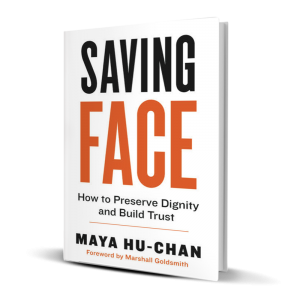 My book, Saving Face: How to Preserve Dignity and Build Trust, illustrates how we can honor face to create positive first impressions, avoid causing others to lose face, and, most importantly, help others save face to build trust and lasting relationships inside and outside the workplace.
This article was originally posted on Inc.com