

Everyone goes through hardship. The most resilient people can weather the storm. Here’s how.
When I was a child in Taiwan, I would always notice the bamboo during walks with my grandmother through our neighborhood. If it was a calm, still day, the bamboo stood upright. If there was a slight breeze, the bamboo would sway softly with it. On days with a strong wind, the bamboo would bend, but no matter how strong the wind, it would never break.
 The bamboo is a symbol of resiliency and how to bend with the winds of life. As an old Japanese proverb states, “The bamboo that bends with the wind is stronger and more resilient than the oak tree that resists.”
Many of my clients are living through “strong winds” right now. Some are resisting, refusing to accept reality, and often snapping under the pressure. Others are gracefully moving with the winds, working with the changes instead of against them.
Whether they’re entrepreneurs, high-level executives, or up-and-coming leaders, my most resilient clients share many of the same traits. Here are a few of the most impactful.
- They embrace resiliency as a skill, not a trait.
My most resilient clients adopt a growth mindset toward all things, including resiliency. They embrace resilience as a skill they can continuously refine, not as an innate, immovable trait. By definition, resiliency is the capacity to bounce back from difficult experiences, adapting and thriving in the face of adversity. This ability to bounce back can be reinforced through practice and experience. Those clients who believe resilience is an innate part of someone’s character—you either have it or you don’t—miss out on the opportunity to develop their own. - They see resilience as something other than “just being tough.”
Some people equate resilience with “toughing it out” and “never letting them see you sweat.” But resiliency isn’t about enduring hardship while pretending to be unaffected. In fact, being authentic and vulnerable and asking for help—qualities often not perceived as tough on the surface—can help you access the resources you need to navigate challenges more productively. Resilient people aren’t immune to pressure or stress—they just know to ask for and seek help when they need it. - They shift perspectives.
A client of mine was mired in a personal conflict with a co-worker. This conflict was coloring every aspect of her work life and causing her a great deal of stress. But was the conflict worth the energy she was giving it? I asked her to imagine herself five years from now. How important will this conflict be then? She laughed. “I’ll be honest. A year from now, I won’t even remember it.” That immediate shift in perspective helped her separate from the in-the-moment emotions and focus instead on the potential lasting impact of the situation. It helped her realize that while the emotions were real, the situation was trivial.
It’s a skill I’ve encouraged in my clients, and those who practice it grow their resiliency. Shifting your perspective can help give you the objectivity to measure a situation more accurately. Ask yourself, will this be important in five years? Will I regret taking action—or not? What will I think when I look back on this moment? - They always find a way.
Another client of mine is experiencing major hardship both professionally and personally. A combination of family and work crises has completely upended his life. It’s a series of challenges that can snap even the most resilient person. In a recent conversation, I asked him how he was managing his new life, filled with changes he didn’t ask for. His response showed me what I’ve always observed in the most resilient people: They don’t resist the situation, like the oak tree in the Japanese saying, but they find a way to work with it, like the bamboo.
“I’ve been thinking about how I can continue my legacy and give back,” he explained. He’d recently lost his job, but not his passion for the work he does. “I have so much knowledge I can share. So, I wrote it all down and I found a publisher. And I’ve been invited to lecture at a local college. This type of work will also give me time to spend with my family, which I’ve never had before.”
He didn’t find a way to keep his job or change his family situation—he knew those things were out of his control. But he did find a way to keep engaging in his passion. He also boosted his resilience by embracing new experiences. Teaching and writing a book were two things that he had never done, but highly resilient people expect that new situations may feel uncomfortable or difficult. They welcome this chance to grow.
Resilience isn’t about resisting challenges but learning to bend and adapt, like bamboo in the wind. The most resilient people see challenges as opportunities to grow, seek support when needed, shift their perspectives, and find ways to move forward even in the face of adversity. By embracing resilience as a skill rather than an innate trait, we can all strengthen our ability to navigate life’s inevitable storms with grace and determination.
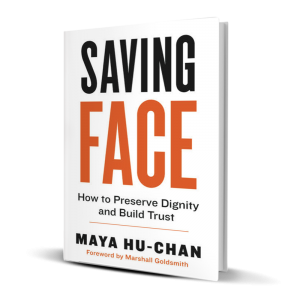 My book, Saving Face: How to Preserve Dignity and Build Trust, illustrates how we can honor face to create positive first impressions, avoid causing others to lose face, and, most importantly, help others save face to build trust and lasting relationships inside and outside the workplace.
This article was originally posted on Inc.com